Abstract
Peer-to-peer (P2P) clean energy trading represents a paradigm shift in the global energy landscape, moving from centralized grid systems toward decentralized, user-driven marketplaces. AIPCHAIN leverages blockchain and AI technologies to establish secure, transparent, and incentive-aligned P2P energy markets. By enabling households, businesses, and prosumers to trade renewable energy directly, AIPCHAIN democratizes energy access, improves grid resilience, and fosters local energy independence. This paper explores the technical architecture, incentive mechanisms, regulatory considerations, and economic benefits of developing decentralized P2P clean energy markets within the AIPCHAIN ecosystem.
1. Introduction: Rethinking Energy Market Design
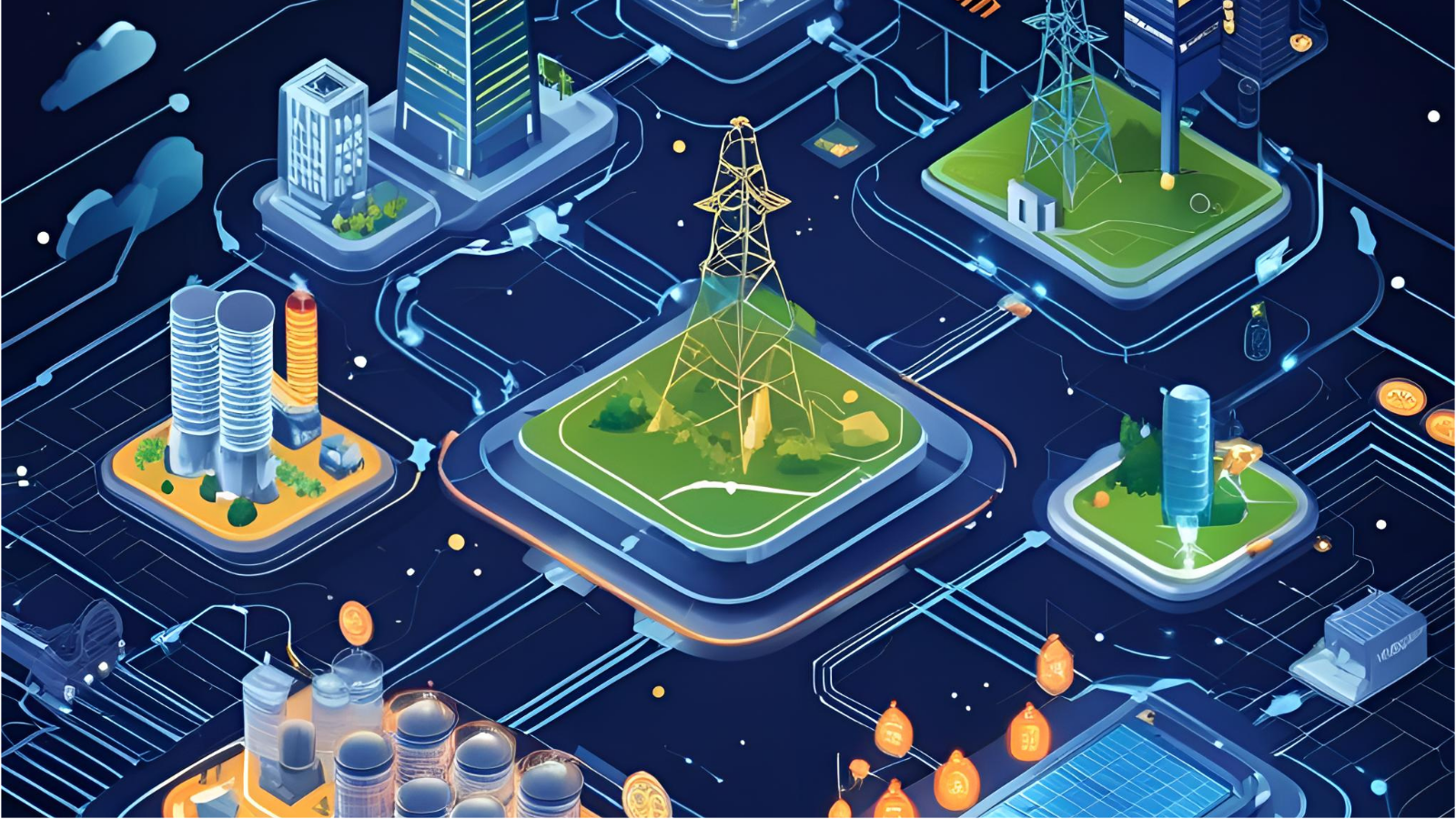
Traditional energy systems rely on centralized authorities for distribution, pricing, and metering. These systems often result in inefficiencies, limited transparency, and restricted access for smaller renewable producers. In contrast, P2P clean energy markets allow individuals and communities to buy and sell locally produced renewable energy directly to one another.
AIPCHAIN facilitates this transformation by:
- Utilizing blockchain for transparent and immutable transaction records
- Employing AI to optimize pricing and demand-supply matching
- Using tokenization to incentivize clean energy behavior
2. AIPCHAIN’s P2P Energy Market Framework
2.1. Tokenized Energy Assets
Energy produced by prosumers is measured using IoT-enabled smart meters and converted into digital energy tokens (e.g., 1 kWh = 1 EAAT unit), secured on the blockchain. Each energy unit includes metadata for source, timestamp, and location.
2.2. AIP Energy DEX (Decentralized Exchange)
The decentralized energy exchange on AIPCHAIN allows:
- Direct P2P energy sales between users
- Automated market making via AMM algorithms
- Price discovery based on real-time supply-demand dynamics
Trades are executed using AIP tokens or energy tokens, depending on participant preferences and smart contract configurations.
3. Smart Contracts for Market Governance
Smart contracts enable trustless energy trading by automating:
- Contract creation for bilateral trades
- Escrow mechanisms to guarantee payment
- Real-time metering validation using energy oracles
- Reward distribution for grid-supportive behavior
These self-executing contracts reduce overhead, eliminate middlemen, and lower transaction costs.
4. AI in P2P Market Optimization
AI algorithms integrated into the AIPCHAIN stack improve market efficiency by:
- Forecasting energy production and consumption at the node level
- Matching buyers and sellers based on predicted needs and availability
- Detecting anomalies in trades or metering data
- Recommending optimal trading windows to maximize user returns
Reinforcement learning models personalize trading behavior for each user to improve participation and impact.
5. Incentive Mechanisms
To promote active participation in the decentralized market, AIPCHAIN implements:
- Token rewards for prosumers generating verifiably clean energy
- Discounts or priority access for users reducing peak-time usage
- Staking bonuses for validators ensuring transaction accuracy
- Carbon offset credits integrated with external registries
6. Regulatory and Compliance Considerations
While P2P markets promote decentralization, regulatory oversight remains essential. AIPCHAIN supports:
- Zero-knowledge KYC for privacy-preserving identity verification
- Soulbound tokens for regulatory role definitions (e.g., producer, validator)
- Transparent audit trails for market inspectors and regulators
- GDPR-compliant data storage and access permissions

7. Benefits of Decentralized P2P Markets on AIPCHAIN
| Benefit | Description |
|---|---|
| Energy Democratization | Empowers users to become producers, not just consumers |
| Transparency & Trust | On-chain data ensures verifiable and auditable trades |
| Resilience & Redundancy | Local markets reduce reliance on centralized grids |
| Dynamic Pricing | Real-time AI-assisted pricing improves efficiency and user engagement |
| Sustainability | Supports transition to cleaner, more distributed energy systems |
8. Challenges and Future Directions
Despite strong potential, P2P clean energy markets face technical and institutional challenges:
- Interoperability with national grid infrastructure
- Scalability of smart contract execution under high-frequency trading
- Consumer education on energy trading tools
- Evolving legal definitions of energy ownership and liability
AIPCHAIN aims to expand its framework through:
- Cross-chain interoperability with carbon markets and green finance protocols
- Community-based DAO governance for local market autonomy
- AI co-pilots to assist new users in navigating decentralized markets
9. Conclusion
AIPCHAIN is spearheading the future of clean energy by building robust, decentralized P2P energy markets. Through the integration of blockchain, AI, and smart incentives, it provides a foundation for secure, inclusive, and efficient energy exchanges. As climate goals intensify, such platforms will play a critical role in decentralizing power — both literally and figuratively.
References
- IEA (2024). Peer-to-Peer Energy Trading and Market Reform.
- World Economic Forum (2023). Blockchain for Energy Transition.
- AIPCHAIN Whitepaper (2025).
- Chainlink Labs (2024). Oracles and Trust in Decentralized Infrastructure.
- IEEE Spectrum (2023). AI and Energy Systems: From Prediction to Action.