
Abstract
The transformation of traditional energy infrastructure into intelligent, decentralized, and transparent systems is increasingly dependent on the integration of IoT (Internet of Things), Smart Meters, and Blockchain-AI frameworks. This paper explores AIPCHAIN’s ongoing research and implementation strategy for integrating these technologies, focusing on real-time monitoring, secure data transmission, and AI-driven energy management. The architecture supports predictive analytics, decentralized energy trading, and policy-level transparency, forming the backbone of next-generation energy ecosystems.
1. Introduction
Energy systems worldwide are undergoing significant transformation as decentralized energy resources (DERs), digital sensors, and advanced analytics gain adoption. Smart Meters, IoT Gateways, blockchain, and AI technologies are becoming essential components in modern grid management. The AIPCHAIN initiative aims to integrate these technologies into a unified architecture that enables secure, intelligent, and efficient energy operations.
This paper presents the AIPCHAIN research model, emphasizing real-time energy monitoring, transparent data logging via blockchain, and intelligent decision-making powered by AI.

2. Smart Meters in Intelligent Grid Systems
Smart Meters are digital metering devices that measure electricity consumption in real-time, transmitting granular, time-stamped data to utilities and other stakeholders. Unlike traditional meters, they enable:
- Bidirectional communication between consumer and grid;
- Automated metering and outage notifications;
- High-frequency data collection (e.g., 1-minute intervals);
- Integration with distributed generation and storage.
Smart Meters are fundamental in demand-side management, dynamic pricing, and detecting anomalies such as non-technical losses or grid faults (Khan et al., 2020).
3. IoT Gateways and Edge Connectivity
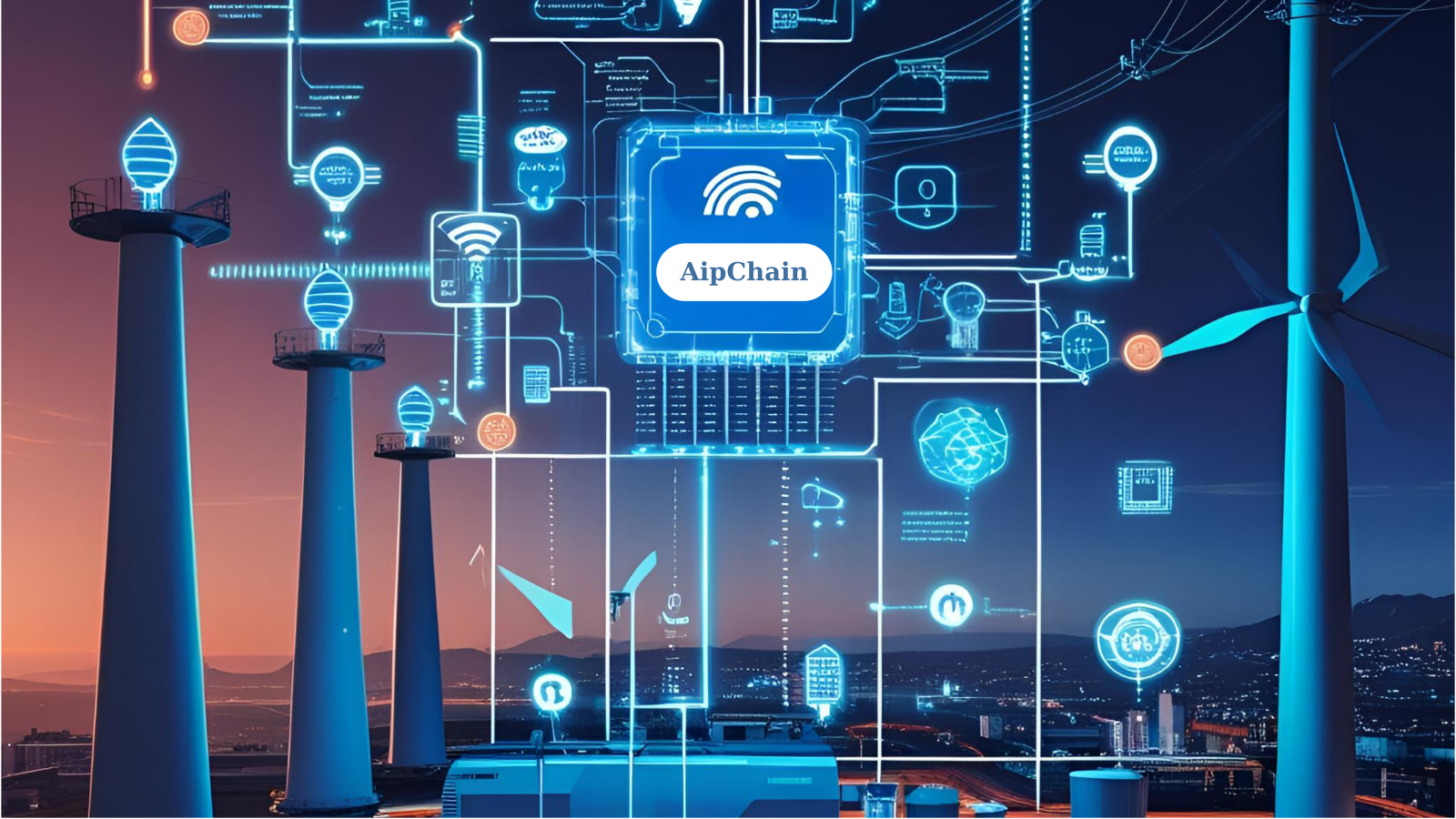
IoT Gateways serve as the communication bridge between field devices (e.g., Smart Meters, sensors, DER controllers) and the upper computing layers such as cloud, blockchain nodes, or AI engines.
Key roles of IoT Gateways include:
- Protocol translation (e.g., Modbus to MQTT, Zigbee to TCP/IP);
- Edge computing for local data preprocessing and filtering;
- Secure data transmission with encryption standards;
- Resilience management via autonomous local control in case of network failure.
These gateways enable scalable and secure connectivity for thousands of smart devices in a distributed environment (Islam et al., 2022).
4. Blockchain Layer: Data Integrity and Decentralized Transactions
The blockchain layer in AIPCHAIN’s architecture acts as a trust infrastructure. By recording metering and transaction data immutably, blockchain enhances data transparency, traceability, and security.
Applications include:
- Decentralized energy trading (peer-to-peer or microgrid-based);
- Smart contracts for automated tariff adjustment, incentive disbursement, and compliance enforcement;
- Tamper-proof carbon credit accounting and energy certification.
The permissioned blockchain system enables regulatory compliance while maintaining privacy and scalability (Nguyen & Le, 2023; Liu & Zhang, 2023).
5. AI Layer: Real-Time Analytics and Forecasting
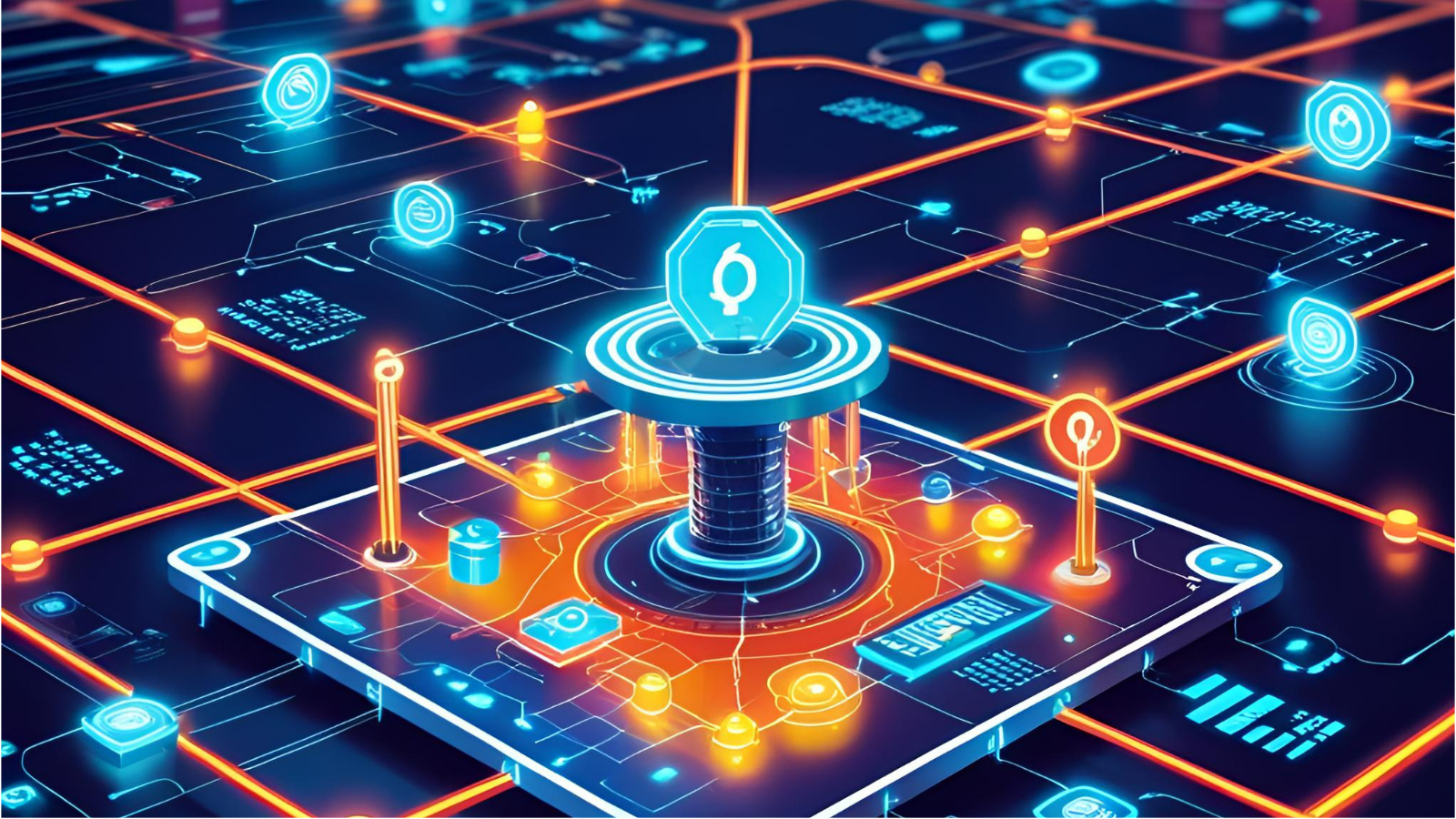
The AI component in AIPCHAIN’s model processes real-time data from Smart Meters and IoT devices to derive actionable intelligence, including:
- Energy consumption forecasting using machine learning models (e.g., LSTM, random forest, hybrid neural networks);
- Anomaly detection such as fault prediction, theft identification, and grid disturbances;
- Optimization of energy flow across DERs, batteries, and flexible loads;
- Autonomous decision-making, including peak load shedding or microgrid islanding.
These AI models benefit from reliable, high-frequency data from IoT and Smart Meters, validated by blockchain records (Gul et al., 2024).
6. System Architecture: The AIPCHAIN Model
| Layer | Functionality |
|---|---|
| Device Layer | Smart Meters, IoT sensors capture real-time data. |
| Gateway/Edge Layer | Protocol translation, preprocessing, local analytics. |
| Blockchain Layer | Immutable data logging, smart contracts, data security. |
| AI Analytics Layer | Forecasting, anomaly detection, optimization. |
| Application Layer | P2P trading, carbon credit tracking, policy dashboards. |
7. Key Benefits and Impact
AIPCHAIN’s integrated system provides strategic advantages for utilities, governments, and energy innovators:
- Transparency: Immutable blockchain records support audits and regulatory oversight;
- Efficiency: Real-time AI models optimize load, reduce outages, and forecast generation;
- Scalability: Modular IoT infrastructure allows expansion across urban and rural regions;
- Security: Blockchain and encrypted IoT communication ensure data integrity and privacy;
- Policy Support: Real-time data feeds enable adaptive regulation and subsidy allocation.
These capabilities align with global objectives toward net-zero emissions, smart grid modernization, and distributed energy democratization.
8. Conclusion
AIPCHAIN’s research and development efforts demonstrate a scalable, secure, and intelligent energy management platform that bridges IoT, Smart Metering, blockchain, and AI. This integration provides a robust foundation for decentralized energy markets, real-time grid intelligence, and transparent regulatory compliance.
By leveraging these technologies, AIPCHAIN is positioned to support the global transition to sustainable, data-driven, and decentralized energy systems.
References
- Gul, M., Qureshi, K. N., & Abbasi, A. M. (2024). Integration of Smart Meters with Blockchain and AI for Energy Forecasting and Management. Frontiers in Energy Research.
- Khan, R., Arshad, N., & Akbar, M. (2020). A Survey on the Role of IoT in Smart Grid Technologies. Energies.
- Nguyen, T. D., & Le, H. Q. (2023). Smart Contracts in Blockchain-based Energy Management Systems. Sustainability.
- Islam, S. M. R., Kwak, D., Kabir, M. H., Hossain, M., & Kwak, K. S. (2022). The Role of IoT Gateway in Secure Smart Grid Communication. Sensors.
- Liu, Y., & Zhang, Y. (2023). AI and Blockchain Hybrid Models for Smart Grid Energy Forecasting. Smart Cities.