
Abstract
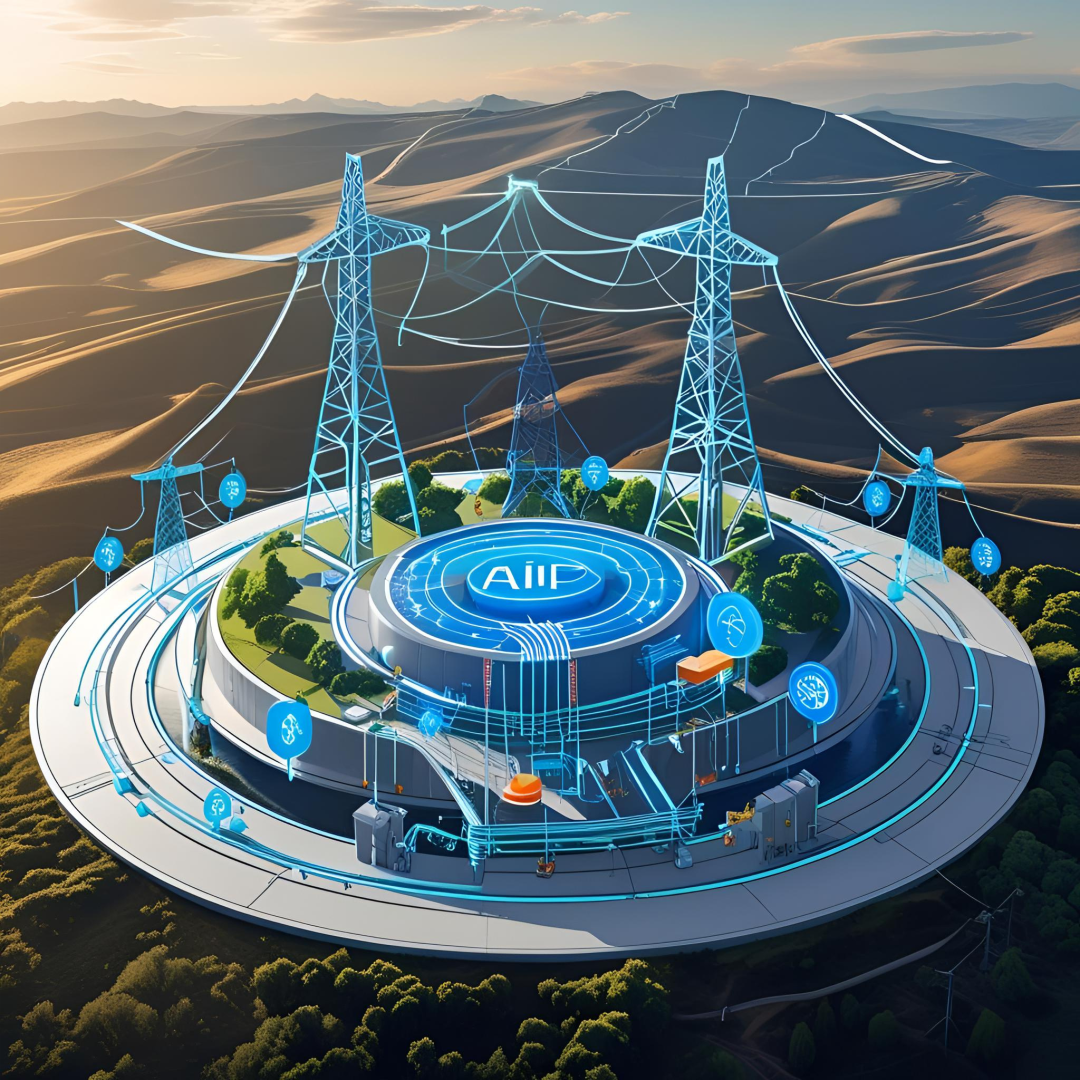
Virtual Power Plants (VPPs) are digital aggregations of distributed energy resources (DERs) such as solar panels, wind turbines, batteries, and flexible loads. As renewable energy proliferation increases, VPPs play a critical role in balancing grids, enabling market participation, and improving energy resiliency. This paper examines how AIPCHAIN utilizes blockchain and AI to manage VPPs in a decentralized, trustless, and economically incentivized manner. By combining intelligent orchestration, token-based governance, and real-time energy settlement, AIPCHAIN’s VPP architecture creates an autonomous coordination layer for next-generation clean energy systems.
1. Introduction: The Need for Smart VPP Infrastructure
As decentralized energy assets grow globally, grid operators face challenges such as intermittency, unpredictable demand, and lack of centralized dispatch control. Virtual Power Plants (VPPs) address these challenges by aggregating diverse DERs into a single, dispatchable entity that behaves like a traditional power plant.
However, legacy VPP models are:
- Often centralized and utility-controlled
- Limited in market accessibility for small prosumers
- Poorly integrated with tokenized energy and smart contracts
AIPCHAIN’s VPP management layer aims to decentralize the VPP concept by embedding AI and blockchain into the core of coordination, pricing, and governance—making energy aggregation autonomous, transparent, and participatory.
2. AIPCHAIN VPP Architecture
2.1 Component Overview
- DER Nodes: Solar, wind, storage, EVs, and flexible loads
- Energy Oracles: IoT-based real-time data feeders
- AI Coordination Engine: Optimizes participation and dispatch
- Smart Contracts: Automate VPP rules and settlements
- AIP Token: Facilitates incentive alignment and governance
2.2 Aggregation and Participation
Each DER is tokenized and represented as a digital twin on-chain. Smart contracts enable dynamic opt-in/out from VPP clusters. Energy availability, capacity, and response time are continuously logged and scored.
2.3 AI Optimization Layer
- Forecast energy availability across nodes
- Schedule optimal dispatch based on market price, carbon intensity, and grid demand
- Balance economic returns with environmental targets
3. Smart Contract Logic for VPP Management
- Automated load dispatch based on pricing and availability
- Token-based reward distribution for participants
- Performance scoring and ranking of DER nodes
- Reputation incentives for long-term contributors
4. Benefits of AIPCHAIN’s VPP Model
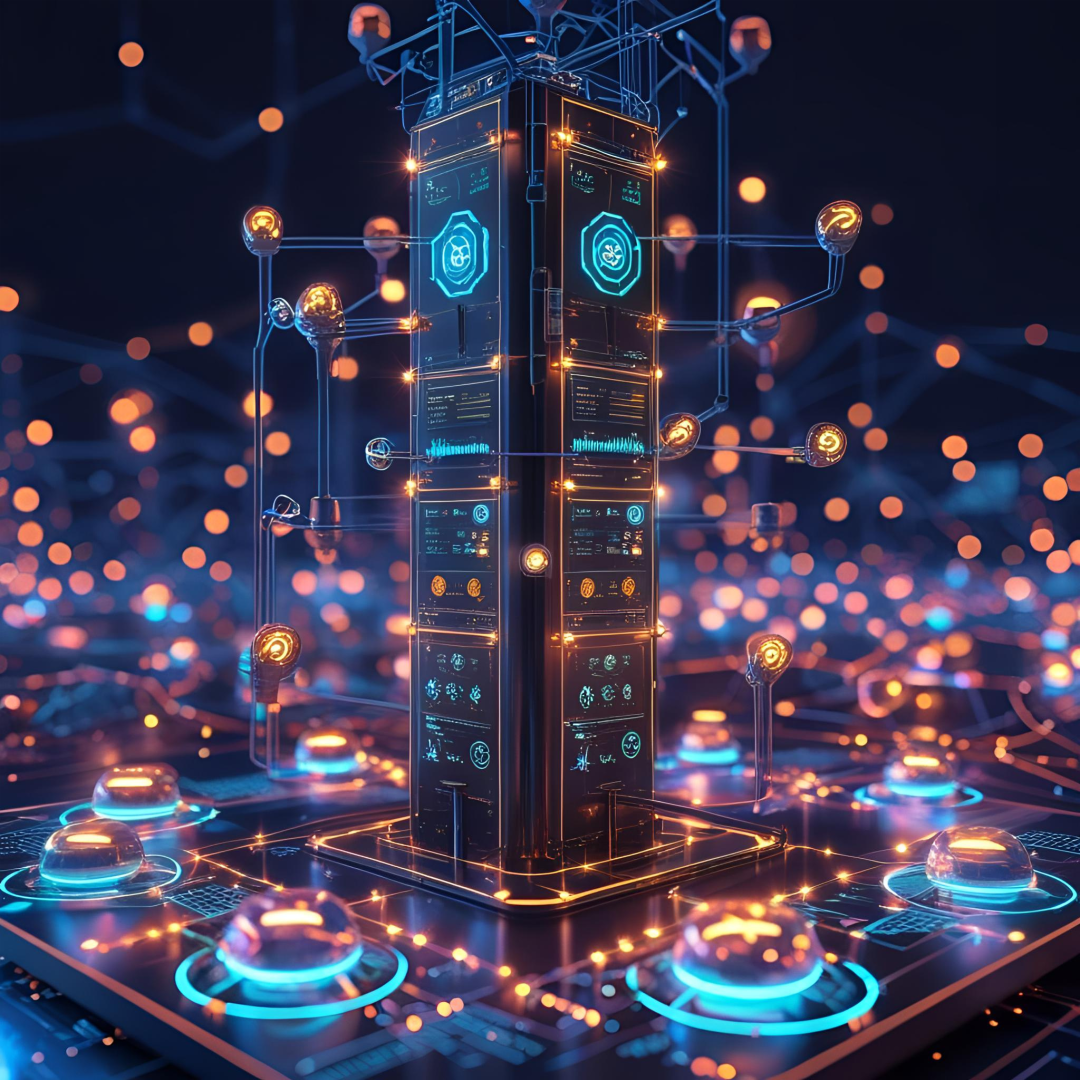
| Feature | Description |
|---|---|
| Decentralization | No central operator; governed via DAOs |
| Real-time Optimization | AI adapts to market signals and weather conditions |
| Transparent Settlements | All VPP activity logged immutably on-chain |
| Inclusivity | Homes and small businesses can contribute |
| Climate Focus | Dispatch optimized for carbon minimization |
5. Use Cases
5.1 Community Energy Networks
- Local solar + battery clusters become VPPs
- Staking-based profit sharing
- Governance through neighborhood DAOs
5.2 Grid Support & Demand Response
- DERs respond to emergency signals in real-time
- Peak shaving and backup power via coordinated discharge
5.3 Institutional Integration
- Corporate energy assets participate in tokenized VPPs
- Token-based ESG reporting and carbon offsets
6. Tokenomics Integration
| Mechanism | Functionality |
|---|---|
| AIP Token | Used for staking, voting, and rewards |
| Energy NFTs | Represent DER participation and history |
| Performance Bonds | Collateral for reliability assurance |
| Dynamic Pricing | AI adjusts reward/pricing models in real time |
7. Challenges and Future Directions
| Challenge | Solution Direction |
|---|---|
| DER Data Integrity | Blockchain oracles + zk-proof validation |
| Coordination Complexity | Layered VPP clusters + AI agent-based control |
| Regulatory Compliance | zk-KYC and cross-jurisdictional APIs |
| Scalability | Rollup-enabled VPPs on Layer 2 |
Future Enhancements Include:
- Federated learning for distributed optimization
- VPP integration with national grid markets
- AI co-pilots for DER cluster management

8. Conclusion
AIPCHAIN’s Virtual Power Plant model unlocks a future where decentralized energy assets become intelligently orchestrated, economically empowered, and environmentally impactful. By merging blockchain transparency, AI optimization, and tokenized incentives, VPPs under AIPCHAIN provide the infrastructure for resilient, inclusive, and carbon-conscious energy grids.
References
- IEA (2023). Virtual Power Plants: Global Trends and Outlook
- IEEE Xplore (2024). Smart Contracts for Energy Aggregation
- AIPCHAIN Whitepaper (2025)
- Chainlink Labs (2025). Oracle Models for DER Coordination
- MIT Energy Initiative (2024). Machine Learning in Grid Management